Showing posts with label Superman. Show all posts

Monday, November 8, 2010

Do Superheroes Act in Socially Optimal Ways?


Microeconomic theory tells us that individual agents, be they consumers, firms, or even superheroes, act rationally. Basically, this means that any individual has a set of stable preferences--which generate a certain level of utility--and that this individual will always behave in a way such that his or her (or its) utility level is maximized.

In other words, economists believe that people try to make themselves as happy as possible. Simple.

Where things become a bit more complicated is when individual demands are aggregated. That is, how do we take the preferences of the individuals in society and design policies that are welfare-maximizing and "socially optimal?"

Consider, for example, the health care market. Obviously, it would be great if every individual could have free, comprehensive coverage. Not only would it ensure lengthier lives, but more people receiving better health care would mean less external costs for society (such as taxpayer dollars going towards treatment of indigent care, lost productivity due to people with illnesses taking sick days, etc.).

Why doesn't everyone have comprehensive health coverage then? Well, resources--including health care--are scarce! Comprehensive coverage for everyone would cost a considerable amount, not just in terms of monetary expenditures, but in time, provider supply, hospital beds, etc. This means that when health care policy is crafted, legislators and other stakeholders need to make hard choices to determine which course of action would benefit society the most.

There are, of course, arguments about welfare enhancing policy. Is health insurance going to be primarily market-based or is there going to be a role for government? If we're going to offer subsidies for individuals to obtain certain services, which services do we offer the subsidies for? If there is a government insurance package, what are the minimum benefits covered by the package? Do we attempt to judge which individuals are more deserving of health care? If so, how do we judge? Severity of the condition? Do we make it first-come-first-serve? How do we perform the cost-benefit analyses to get these answers?

Superheroes face this problem every day. Take Superman, for example. Barring the fact that Superman's duties extend beyond the scope of one major city, let's just limit this analysis to his role as the protector of Metropolis. Each and every day, there are people who need saving. Superman provides a very crucial public service (actually he pretty much has a monopoly on it): fighting crime and saving lives. He has a breadth of unique abilities that allow him to perform this service unlike any other agency, including the police or government.

Yet despite his unique abilities, he is still a limited resource. Superman cannot be everywhere at once and he cannot stop each and every crime in Metropolis. This means that even Superman has to make choices. Each civilian he saves from being thrown off of a building means that a different civilian on the other side of town being threatened with dismemberment by Metallo is not receiving his help. In this sense, Superman can be thought of as a sort of social planner for a good that he just so happens to provide. He implicitly assigns weights to individuals in Metropolis, in effect judging who is deserving enough of his rescue.

How does Superman do this? How does he assign these weights? And is this method socially optimal?

Intuitively, we would think that the most imminent dangers are the ones most worthy of Superman's attention. And indeed, Superman does tackle the gravest of threats to an extent. Should there be a catastrophe that is bound to kill or injure hundreds of citizens, you can bet to see the Man of Steel there. Should Lex Luthor unleash some sort of robot warriors on the city, Superman will try and stop them. Should Darkseid attempt to enslave humanity again, Superman will take him on.

But this system is obviously imperfect. What if Metallo is overturning cars on one side of town and Brainiac is creating robot-zombies on the other? Deciding on which threats are the most dangerous is a difficult task, even for Superman. It is a fact that many of his villains have taken advantage of in the past in order to thrust the Man of Steel into difficult moral situations.

Also, let's not forget that this is only Superman's system to an extent. There isn't always a world-ending event in Metropolis. Most of the time, all you have are muggers, bank robbers, and lets face it, people who just accidentally fall off buildings. How does Superman weigh these people? Well, most of the time, we see him just dash after the criminals that are closest to him. We've seen Clark Kent sitting at his desk at the Daily Planet numerous times, only to hear a scream in a nearby alley. He then finds a phone both, changes, and it's up-up-and-away!

It would seem that most of the time, Superman weighs simply on proximity. That means people within a five mile radius of the Daily Planet should be the safest in Metropolis. Of course, it is also a prime spot for villain activity.

Answering the question of whether this "proximity, unless it's really really dangerous" policy is social welfare maximizing is tricky. We obviously want Superman to assist with the gravest threats, but we also don't want to trivialize run-of-the-mill muggings.

Perhaps it is time for Superman to retire his one-man planner status. Should there be a government task-force delegated with the duty of allocating superhero resources to the citizens of the United States?

Wednesday, September 29, 2010

Lex Luthor Loves Land- The Great Gotham Swindle and How it Affects Our Lives


Gene Hackman as Lex Luthor from Superman II, obtained from Wikipedia.org

We all know that Lex Luthor has a great interest in real estate. This was established way back in Richard Donner's first Superman film. In that movie, Luthor's plan was to sink California so the land he had purchased in Nevada and Arizona would be worth a fortune as beach-front property. Superman stopped that plan, but Luthor kept his fixation on land. In Superman Returns, Luthor went the other way in his schemes. He tried to grow an entire continent out of Kryptonian crystal. Planning to rearrange the surface of the Earth and get rich by renting his new continent, Luthor excitedly went along with his plan until Superman tossed his new continent into space.

But the Lex Luthor of the comics also has a fondness for acquiring land. In the year-long Batman crossover "No Man's Land" that ran through the Bat-family books in 1999, Lex Luthor hatched a plan involving seizing control of all of Gotham. Gotham City had just been wracked by a massive earthquake which reduced most of the city to rubble. In the wake of this disaster, the US
government isolated the Gotham disaster zone and prevented anyone from exiting or entering. Inside the city, Batman and Commissioner Gordon tried to maintain control against the gangs and madmen who roamed the streets.

In the midst of this chaos, Luthor identified a way to fill his own personal habit to get that real estate fix he had been needing. Using agents to destroy the original land deed records for Gotham, Luthor tried to gain ownership of the city without paying a cent. He offered to help Gotham's citizens rebuild without telling them that his assistance came with the price of ownership of their land. Eventually Batman foiled his plans, but I'm sure Luthor's desire for real estate has not yet been satiated.

Batman:No Man's Land Volume 1, obtained from Wikipedia.org

Now, you may be asking why I bring this up. I do so because we are in the midst of a world financial crisis. A crisis so enveloping that it affects all of our lives. It almost seems like some criminal mastermind has orchestrated this recession. Someone who values ownership of property above else. Perhaps someone who would be interested in giving mortgages to high risk lendees who would not be able to meet their financial obligations once rates had been raised. Someone who would watch gleefully as he regained control of their repossessed properties while the world markets crumbled.

That's right, LEX LUTHOR engineered the sub-prime lending crisis!!!!!!!!!!!

Kevin Spacey as Lex Luthor from Superman Returns, obtained from Wikipedia.org

I bet, if we look carefully at those mortgage agreements, somewhere on those forms we will see a monogramed "LL."

Damn you Lex Luthor. Damn you!


Wednesday, January 27, 2010

Priorities, Lois Lane

Lois argues with Perry White about true news reportingSuperman: Secret Origin #3 by Geoff Johns and Gary Frank
Click to See The Rest of the Image

Poor Lois. She thinks that in times of economic trouble, particularly problematic for the newspaper industry, she can just continue to push the boundaries and report actual news stories about real issues. This just in, Lois: no one cares about the public transportation infrastructure or political corruption of frivolous waste of taxpayer money. Did you learn nothing in Econ 101? I think it was Adam Smith who said that the only way the newspaper industry can survive is by resorting to spectacle and sensationalizing stories.

Here are the kind of news stories you should be thinking about:

"Superman's Birth Certificate May Reveal Un-American Origins. Is He Fit to Save Our Country?"

"Experts Debate Whether Lex Luthor is Man or Alien Cyborg."

"Study reveals people are indeed better than fruit."

Priorities, Lois.


Thursday, October 15, 2009

The Supply of Water in Metropolis

Superman #692 by James Robinson and Fernando Dagnino (2009)

As is the case with most cities in the DCU, things are not going to well in Metropolis. Superman's gone, the city's new protector Mon-El has apparently been killed, and the citizens have lost their faith in superheroes. To top it off, the city's sewer system has been completely destroyed in a recent battle.

Seems like a fairly basic repair job, right? I mean bombs go off in the sewer systems of Gotham and Metropolis all the time (speaking of which, it would seem as though villains tend to love spreading poison through water supplies so you would think the cities would have learned to increase patrol of the sewers). Except, this time the bomb was "laced with encoded nanotechnology [so that] no sooner does a speedster or power ring start fixing the sewers than the nanobytes undo that reconstruction." S.T.A.R. labs, Mr. Terrific and Will Magnus (genius scientist who created the Metal Men) have been unable to do anything.

We've discussed the economic effects of something like this happening before. It's pretty basic. When an external force causes the supply of a good to decrease, price goes up. Take a look at the following detailed chart, which demonstrates this effect:

Indeed, if such destruction did occur then Metropolis would certainly be facing higher prices for water. Although, I think Robinson might be portraying too bleak a picture in this book. Yes, there would be some major hygiene issues and city residents would have to give up on showering for a while...

Yet, it seems to me that despite not having running water throughout the city, drinking water could be shipped in mass quantities from neighboring states. Given the severity of the situation, I think the government could subsidize the costs of transportation. After all, we've seen that DCU governments are not exactly the most frugal. They're willing to dish out loads of cash to fund anti-alien squads when the Justice League is a phone call away. Why not add a line item in the budget for some basic sustenance until this whole mess is straightened out?

Also, what happened to the lucrative bottled water business? I thought that people were drinking that stuff even before Metropolis's sewer system was destroyed. Unless there is only one major bottled water company, it uses "municipal sources" and not springs, and it only has one plant that happens to be located in Metropolis, I think it's a safe bet that there will be plenty of water to drink.

Really, people should not be lumbering down the streets suffering of dehydration. Moreover, Governor Klein should not have to ration the consumption of water. What's worse is that street thugs have now apparently tapped a new black market by selling small quantities at exorbitant rates. I feel like this might be an exaggeration of what would happen in this situation. There would be some discomfort, but as always in Metropolis, everything would work out.

Finally, the price of water has apparently soared to such levels that it now as a street value higher than gold. Granted, I don't know what the "street value" of gold is, but just to give you an idea of what this means, here's a chart on the current market value of gold:

reprinted from goldprice.org

Monday, October 5, 2009

A Unified Theory of Superman's Powers

Via Qwantz, This is the name of an extremely fun new physics paper by Ben Tippett, proposing that the gamut of Superman's abilities can actually be reduced simply to one comprehensive power. Here is the abstract:

Since Time immemorial, man has sought to explain the powers of Kal- El, a.k.a. Superman. Siegel et al. Supposed that His mighty strength stems from His origin on another planet whose density and as a result, gravity, was much higher than our own. Natural selection on the planet of krypton would therefore endow Kal El with more efficient muscles and higher bone density; explaining, to first order, Superman's extraordinary powers. Though concise, this theory has proved inaccurate. It is now clear that Superman is actually flying rather than just jumping really high; and His freeze-breath, x-ray vision, and heat vision also have no account in Seigel's theory.

In this paper we propose a new unified theory for the source of Superman's powers; that is to say, all of Superman's extraordinary powers are manifestation of one supernatural ability, rather than a host. It is our opinion that all of Superman's recognized powers can be unified if His power is the ability to manipulate, from atomic to kilometer length scales, the inertia of His own and any matter with which He is in contact.

All the major hits are there: super strength, super speed, super senses, x-ray vision, freeze breath, heat vision, and even his ability to disguise himself as Clark Kent.

I wonder about two things. One is whether there is any way to incorporate his weakness of not being able to use super sight on lead into the theory, or whether that (as I suspect is the case) is just an arbitrary limitation of his power? The other thing is if I accept this unified theory, are there any other other powers that Superman should have at his disposal that we do not see him using all that much? For instance, it's been a while since physics, but Magneto's ability to manipulate magnetic fields should probably also allow him to induce or at least fiddle with electrical currents, right? But I feel like that's not something we see him do all that much. Are there analogous powers for Superman that are consistent with the unifying theory?

If you're interested about the physics of superheroes, you should definitely read (if you haven't already), the wonderful book by Professor James Kakalios, aptly titled The Physics of Superheroes. It's been years for me--I think I might reread!

Monday, September 21, 2009

Hey US Government, Give Superman a Break from Paying Taxes!

reprinted from comiccoverage.typepad.com

What is this guy's deal? Superman's never been asked to pay taxes before because he's not really a United States citizen, is he? Clark Kent is a U.S. citizen. Clark Kent uses public education, roads, etc. And thus Clark Kent pays federal and state taxes. Superman, on the other hand, is not a registered citizen. He does not even really use public services. When was the last time you saw Superman driving a car down the street and paying tolls? Really, Superman's home isn't even in the United States at all. It's all the way up in the North Pole, where he can cleverly dodge U.S. tax laws.

By the way, "you owe the government a fortune in taxes" has the implication that somewhere in the catacombs of the federal government, there exists a file that details what Superman owes. They don't even know what he makes!

I guess it would be understandable if the United States government did not know that Superman had a secret identity at all. If they thought that he was just an alien who, after fighting robots and catching crazy tax collectors, goes to some apartment and flies away every time a bill shows up, then it might be reasonable to ask him to pay taxes. Of course, the only way to do this and preserve his secret identity would be some sort of flat tax system since no one has any idea what Superman's resources actually are. Not only that, but the government would have to employ more tax collectors like this one to show up at his doorstep--or to keep jumping off buildings.

But, come on. I thought that it was common knowledge that he had a human secret identity. Do people really think that he walks into a grocery store in his tights and picks up some potato chips? If not, then the government would be double taxing the poor guy.

Give Superman a break!

Friday, September 11, 2009

September 11

I now realize that I probably should have posted yesterday's article (which had a lot to do with 9/11) today. Oh well.

For now, here is some wonderful art from Alex Ross (via ComicMix)

reprinted from comicmix.com
Art by Alex Ross

Friday, September 4, 2009

Does the United States Need More Ore?

I'm actually asking.

Superman #691 by James Robinson and Renato Guedes (2009)

The President of the DC Universe United States is about to sign a free-trade agreement with the nation of Markovia, it seems primarily because of an interest in its ore reserves.

Particularly with iron more, the United States uses most of its stock to produce steel, though this is pretty much true throughout the world. The United States Geological Survey estimates that in 2004 there were more than 800 billion tons of crude ore throughout the world, with 230 billion or so containing iron. The U.S. had about 110 billion crude ore, with about 27 billion tons of iron. They accounted for about 4% of the world's iron ore output and 5% of consumption.

Regarding imports and exports, according to the International Trade Centre, the U.S. accounted for about $611 million in iron ore imports, which is about 1.5% of the world's total. This ranked it number 11 in imports in 2005. It exported about $580 million.
What does this actually mean for whether the United States actually needs more? Steel production is cheaper in foreign countries, so in tough times the United States has been importing more steel from Canada and Brazil.

Furthermore, China's demand for ore has been rapidly growing in recent years, accounting for an astonishing 45% of imports. This has had a considerable effect on ore exports not only in the U.S., but also in Brazil and Australia, who continued to invest large amounts of funds towards increasing production. Taking a look at the ITC data for exports, we can see that from 2001 to 2003, the United States had maintained about $230 - $250 million in iron ore exports. Then in 2004, exports rose to $337 million, and shot up again in 2005 to about $580 million.

Of course, imports also significantly increased in 2005 from 2004, going from $451 million to $611 million.

I wonder if there's another reason the United States is so passionately interested in Markovia. Any ideas?

Thursday, September 3, 2009

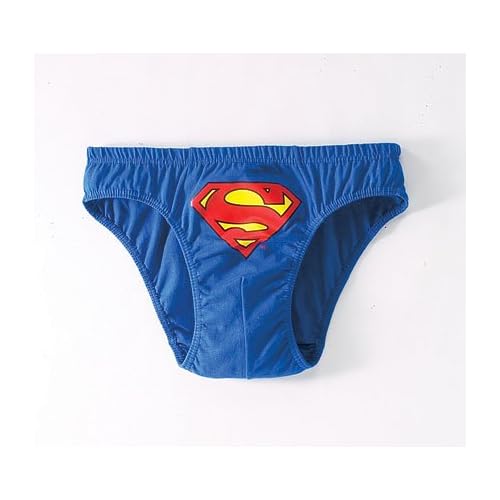
Superman is Buying New Underwear: Good News for the Economy?

reprinted from amazon.com
According to the Washington Post, another unfortunate effect of the recession has been a slowing in the sale of men's underwear. In fact, it is predicted that sales are to fall 2.3% this year, which is the first drop since the company Mintel had begun collecting data in 2003. As they put it:

Here's the theory, briefly: Sales of men's underwear typically are stable because they rank as a necessity. But during times of severe financial strain, men will try to stretch the time between buying new pairs, causing underwear sales to dip.

That is unfortunate for heroes like Superman, who wear their underwear on the outside. If Superman is forced to purchase less underwear and wears the same few pairs each day as part of his crime fighting routine, I think this poses are pretty significant hygiene issue. Plus, it's disgusting. That is, unless he just spends more time doing laundry. But he's Superman, remember? He has no time for laundry!

Worry not, however, citizens of Metropolis. There is good news.

But the men's underwear index -- or, conveniently, MUI -- may also have a silver lining. Mintel predicts that next year, men's underwear sales will fall by 0.5 percent, and as with many economic indicators, a slowing of a decline can be welcomed as a step in the right direction. Retailers are reporting encouraging signs in the men's underwear department.

If underwear sales is indeed an adequate economic indicator, then Superman should be back to his regular, clean self in no time.

HT: NPR

Tuesday, July 14, 2009

Fee for Service Superheroes: Will Privatization Work?

You know, Spidey jests here, but what if superheroes did actually start changing fees for their services to those they save?

Obviously, this lends itself to moral arguments concerning the nature of superheroes as selfless arbiters of justice and champions of the human spirit. After all, how can ordinary humans come to respect a hero if that hero profits financially from his or her potential misfortune?

But let's think about Spider-Man and the residents of New York City for a minute. Spider-Man is essentially a public good offered to those living in New York (and occasionally those in Boston, as depicted above). To be sure, let's recall that a pure public good is generally regarded as a good that is non-rival in consumption, meaning that one person consuming the good does not in any way affect another's opportunity to consume it, and non-excludable, meaning that there is no way that anyone can be denied access to this good. A typical good that is considered a pure public good is national defense.

To be technical, Spider-Man is not really a pure public good, but rather an impure public good. He satisfies the aforementioned conditions to an extent, but not fully. Indeed, Spider-Man is non-excludable to NYS residents. He is an equal opportunity savior and does not discriminate against any citizen. All he requires is that they be in need of his assistance. However, unlike national defense, he is not really non-rival. He is only one, super-powered man. If the Green Goblin is throwing a citizen off of a high-rise building on one side of town and Doctor Octopus is blowing up a science facility on the other side of town, Spidey generally can't be at both.

And this is where the problem is. As it stands, the social costs imposed by Spider-Man's existence are paid for by the public. These social costs mostly take the form of negative externalities caused by his battles with evil. By this I mean the costs of repairs for all the damaged buildings, villain escalation, and others. It is extremely likely that the government responds to these externalities by imposing higher taxes on the public, particularly if they are subsidizing the costs of construction and repair.

This also means that there could be a moral hazard problem. Living in an area in which you know there exists such a public good might entice you to alter your behavior. In the case of Spider-Man and New York City, residents might elect either to live in more dangerous neighborhoods or engage in more risky behavior, knowing that they have a protector who has a high probability of saving them in any unfortunate circumstances.

You might claim that this is far-fetched. Why would anybody choose to throw themselves in harm's way? Well, it turns out this happens pretty often in comics. A perfect example is Lois Lane. Since the arrival of Superman, Lois has gone on more risky assignments for The Daily Planet, has kept more dangerous company, and has generally had near-death experiences at the hands of known thugs or villains to a significantly larger extent. Many citizens, like Jimmy Olsen, have even joked that she is nearly invulnerable, since it seems as though Superman had become her personal bodyguard. In the film Superman II, she even jumped off of Niagara Falls (and out of the Daily Planet in the Richard Donner version) with full certainty that Superman would save her.

Reprinted from chud.com


This behavior could be particularly taxing on a hero like Spider-Man and could have catastrophic consequences on New York City. We already know that Spider-Man has trouble balancing his duty as a superhero with his personal life and part-time job. Even when he took up the job of crime fighter full-time in Mark Waid's recent "24/7" storyline, he was still incapable of being at every crime.

This would only be exacerbated if more and more people continued to engage in needlessly risky behavior. And this means that Spider-Man might one day have to start picking and choosing, neglecting certain crimes in order to stop the more high-priority ones. Or his attention towards the little ones might cause him to miss the big ones. One day, Spider-Man will be off saving some guy who thought he could jump from one roof to another on the Upper West side, while Mysterio captures Mary Jane and throws her off the Brooklyn Bridge.

The answer to these problems is privatization. Suppose that Spider-Man decides to charge for his services. This way if a Lois-like reporter was a frequent consumer of Spidey heroics, she would have to pay more for them. This could create a market for Spider-Man such that individuals would utilize an equilibrium quantity of him based on what they would be willing and able to pay for him. It would effectively reduce any potential moral hazard problems, as individuals would be willing to take less risks, knowing they would have to pay for those risks later.

Not to mention, Spidey would be able to make some cash on the side, which he might even use towards more effective means of fighting crime (though likely he'll just buy some air conditioning for his apartment).

Is privatization a good idea? Probably not. Once again, there might be some pretty disastrous effects for morale if superheroes only saved people for a fee. In addition, it would mean that villains would be successful more often. Further still, it is likely that the low-income populations will not be able to afford superhero services and would hence be excluded from the market. I generally think this is a bad thing, especially for something that could mean the difference between life and death.

Maybe Spidey can find ways to get around this. Maybe he can charge only people above a certain income. Or maybe he can charge by the nature of the situation. If somebody jumps off a roof, maybe he should pay. But if Green Goblin attacks, it's on the house. Obviously, however, this raises issues of equity.

Superhero privatization is a pretty ridiculous concept. But it's fun to consider. What do you think?

Friday, July 10, 2009

Superman and Batman Arrested for Beating Up Some Cops

Reprinted from newsarama.com
Image via New York Post

You heard that correctly. The New York Post reported that the Man of Tomorrow and the Caped Crusader have been arrested at Times Square for assaulting police offers. According to the Newsarama blog:

Jokes aside, what apparently happened is Maksim Katsnelson of the Bronx (Superman) and his friend Frank Frisoli (Batman) decided to dress up as superheroes in Times Square. For fun, obviously. But when the NYPD asked for licenses for them to perform in costume in public (!!), Katsnelson apparently threw the first punch, yelling “I’m not getting arrested.”

First of all, I am extremely disappointed in Superman's conduct here. Nevertheless, I am a little dismayed to hear that the events of Marvel's Civil War have apparently now been transplanted over to the DC Universe. Now the government requires our superheroes to have permits to patrol the streets? Decades of service and now Superman needs to identify himself? Yes, this is a good incentive to minimize superhero externalities, but how can we expect our saviors to protect their own families with their identities registered with the NYS police force? What's next? Is Superman going to be shot outside a courthouse?

Second, if the events of Civil War were to be applied to DC, I would expect Superman to take the role of Captain America and Batman to take the role of Iron Man. But this doesn't seem to the case here. They are both standing up against the Superhuman Registration Act. So who instigated this whole permit thing?

One thing is for sure. This adds to my argument that Superman should not be elected Mayor of DC. All the more reason to support The Green Lantern in today's election.

Wednesday, July 8, 2009

Green Lantern For Mayor: Brightest Day

(This is the first in a series of two posts regarding the current superhero mayoral election in DC. This post supports Green Lantern for mayor. Mark will post one later that expresses doubts over Green Lantern's candidacy).

Reprinted from bluestatedigital.com


Yesterday, we discussed the Green Lantern's announcement to run for mayor of DC. Well, it looks like the election is heating up, as more candidates have entered the race. According to a Robot6 post today:

It appears Spider-Man is also in the race. As is Superman. And the Atom. Even Batwoman, who is apparently for bird equality in D.C.

As it turns out, the sites are part of the New Organizing Institute’s BootCamp, where attendees are tasked with running their own mayoral campaigns for fictional characters as part of their training. You can find a full list of the sites they’ve created here.


Before we move on to analyzing the Green Lantern's merits, I would first like to point out why he would be a better mayor than the other popular candidates. Specifically, I am going to talk about Spider-Man and Superman, as they seem to me the most likely to contend with the Green Lantern. Batwoman and Batgirl have not demonstrated any significant leadership abilities until the disappearance of Bruce Wayne, and even now they lurk in Dick Grayson's shadow. Wonder Woman is conditioned to pound opposition, not hold press conferences and appear at legislative hearings. The Atom is a renownded scientist, but as we learned from Woodrow Wilson, academics should not be politicians.

So there's Spider-Man. Yes, we all love Spidey. He's fun, he's witty, he's responsible, and he has a generally incorruptible sense of morality. He's young and in touch with youth voters. He even received glowing approbation from President Obama in issue #583 of The Amazing Spider-Man. However, this does not imply that Spider-Man would make a good, or even adequate political leader. First of all, Spider-Man is not a leader. He is a team player, but certainly is not capable of handling administrative duties and delegating tasks. Secondly, one of the persistent themes in his life is his utter inability to maintain both a personal and professional life. Peter Parker has sacrificed a tremendous amount, including schoolwork, careers, and even love, in order to maintain his role as New York City protector. He had trouble balancing a part-time job as a photographer at the Daily Bugle with his duties as Spider-Man. Imagine if he were to balance fighting crime with being the Mayor of a city. Besides, Spider-Man does not and has never even lived in DC--the city or the universe! What would he know about holding political office in it?

Reprinted from http://noiteam1.ngphost.com/
From: The Amazing Spider-Man #583 by Zeb Wells, Todd Nauck, and Frank D'Armata

What about Superman? It would seem that Superman would be perfectly qualified to hold political office. America is in love with the Man of Steel. He smiles, beats up the bad guys, makes for great photos, and most of all, stands for truth, justice and the American way. Without a doubt, Superman is a natural born leader. The whole of the DC superhero community looks for his guidance in nearly all matters regarding Earth's safety. Here's the problem: he's Superman. He has better things to do than to sit at a desk. He patrols Metropolis and he serves as leader of the Justice League, who defuse threats to Earth's continued survival week after week. He was one of the most integral players in the recent defeat of Darkseid during Final Crisis. I personally would not want Superman to neglect his duties in the Justice League and risk the world's safety, would you? I would rather have somebody else handle the position of Mayor of DC.

And that someone is the Green Lantern.

Let us discuss his credentials. Kyle Rayner was specifically selected to serve as a Green Lantern following the tragic events of Hal Jordan's tenure as protector of Earth. Remember that Mr. Jordan had been a test pilot and had been awarded his power ring due to his honesty, bravery and fearlessness. These are qualities that the Lanterns and the Guardians of the Universe believed crucial towards membership in their ranks. Although Hal Jordan served proudly for many years, tragedy followed when he became possessed by Parallax--an agent of pure fear--went insane and destroyed Coast City.

It was then that the Lanterns decided they needed a new protector to replace Jordan--one in which the same tragedies would not repeat. Thus they had decided to change the job requirements. Rather than selecting someone based on the archaic, silver-age qualifications of fearlessness and honesty, they went in a new, more modern direction. They selected Mr. Rayner, a graphic artist, who was known more for his creativity and imagination than for his bravery. Rather than hastily, but confidently jumping into battle at the first sight of opposition, Rayner harnessed his boundless artistic imagination towards new and efficient solutions to problems of the day. And perhaps this was why Kyle Rayner retained such a strong public image in the United States.

Yet, this certainly does not imply that Mr. Rayner is void of bravery. Actually, quite the opposite. It turns out that much of the reason for why he was chosen following Coast City's catastrophe was that the Guardians believed that he knew fear well enough to be able to withstand torment by the Parallax. In fact, he even counseled other Lanterns (including Hal Jordan) as to how best overcome their innermost fears. And during the Sinestro Corp. War, Rayner did become possessed, but was actually able to take the form of the god, Ion, and engage Parallax in battle! Although he was defeated, there is no denying that this was a magnificent feat which not only showcased his bravery but sheer force of will.

Not only does Kyle Rayner possess the character and determination for Mayor of DC, he supports a range issues which will engender a positive effect for society and the economy.

Regarding the economy, the District of Columbia had the 10th highest unemployment rate (10.7%) in the country as of May 2009. Mr. Rayner will work towards easing this burden on the labor force by creating new, greener, energy-efficient jobs. He has proposed investing in local training programs, particularly in impoverished areas, in order to provide the necessary training and qualifications to secure jobs on the market for lower-income high school graduates. He has proposed investing in making DC's physical infrastructure by weatherizing older buildings and improving the public transportation system.

This could certainly contribute significantly towards easing the burden of the recession and DC's massive unemployment. Here is a report published by the Political Economy Research Institute, suggesting that investment in public infrastructure and economic growth rise and fall together. In a modeled baseline scenario for the year 2007, they estimate that a $54 billion increase in public infrastructure spending would increase annual GDP by about $46 billion. They also state that infrastructure spending will create about 18,000 jobs for every $1 billion spent.

Speaking of energy, the Green Lantern has a power ring, from which he could actually use the energy to create anything subject to the bounds of his imagination and will. As we discussed, Mr. Rayner in particular is known for his imagination and will power. Therefore, the use of the power ring under his guidance would be the most effective in helping DC recover in troubling economic times. In several occasions, Lanterns (such as John Stewart) have actually used the ring in order to rebuild destroyed cities and planets. In addition, his power ring is unique amongst the Lanterns in that is does not require recharging every 24 hours, its power is not negated by the color yellow, and is not powered by the Central Battery.

Reprinted from bluestatedigical.com


Regarding education, Kyle Rayner has not only stated that he supports investing government funds towards strengthening the foundation of early education, but he also believes in providing incentives and rewards for teachers to perform better and improve student outcomes. Consider this NBER paper by David N. Figlio and Lawrence Kenny, which demonstrate a positive relationship between financial incentives and outcomes (though to be fair was unable to rule out the overall qualities of the schools in the sample as a potential factor).

For these reasons, I believe that the Green Lantern possesses the intelligence, determination, willpower, imagination, and creativity to make the best Mayor of DC. In addition, he seems to possess the most solid grasp of the issues and effective solutions as combating poverty and social inequality.

And just as a reminder, what was the "greatest fear" that Parallax had tormented Kyle Rayner with in the time he was possessed? It was the fear of letting down everybody he knew. The Green Lantern is the people's champion!

Monday, July 6, 2009

KNEEL BEFORE ZOD! (and relinquish access to all your assets)


After watching Superman II, I realized an interesting dilemma inherent in many supervillain schemes. In Superman II, General Zod and his Kryptonian two cohorts arrive on Earth with the aim of conquering the planet. And within a period of a few days, Zod and company bitch-slap the military and humble the President on National Television. Superman is elsewhere mining the depths of his heart to discover the meaning of true love which, as we all know, is fairly time consuming. But for Zod it was mission accomplished. Not like George Bush in Iraq, because Zod's mission was actually accomplished. Zod ruled the world. And then he got bored. Really bored. A particularly amusing scene shows the Zod and company sitting in a shattered Oval Office zoning out.

Which brings me to the dilemma mentioned earlier. If a supervillain's goal is to rule the world, will the prize be more interesting, or will the effort? Once Zod ruled the world, he was bored because there was nothing else to do. Until Lex Luthor walked in, informing him that the Son of Jor-El was living on Earth and waiting for a beat down. But prior to that, Zod believed he had truly conquered the world and everything in it. That means that he owns everything and all of Earth's assets are within reach.

But do any of Earth's resources have any value when you already have everything? The traditional means of economic valuation (like supply and demand) completely break down when one individual has complete control of supply and therefore has no demand. And supervillain rule is unique in this respect because a supervillain has direct control even beyond what a leader would have in a monarchy. Literally, everything belongs to the villain. And if you disagree with the supervillain, they will incinerate you. That's a pretty definitive way to establish ownership.

I believe Mark Waid's series "Empire" was exactly about this sort of thing. What does a supervillain do once he has control of the world? Unfortunately I didn't read that series, so any insights contained therein are not available for me to use.

Wednesday, June 3, 2009

Could New Krypton Have Stayed on Earth?

Reprinted from comicartcommunity.comThe Citizens of New Krypton by Pete Woods.

It's truly a shame that Kandor's temporary stay on Earth did not work out as well as Superman had intended. But, economically and politically, it was doomed to begin with.

After Superman defeated Brainiac and retrieved the stolen city of Kandor, he restored it in its original integrity near the Fortress of Solitude at the North Pole. Overnight, Earth became the new home for approximately 100,000 Kryptonians. Hopes were high to assimilate the Kryptonian population into the Earth community and to teach them the way of Earth cultural and democracy. Yet as tensions rose (unfortunately human tendencies towards xenophobia and paranoia garnered the mistrust of many ill-tempered Kandorians), an exectuve decision was made by Alura-El (Superman's aunt and Supergirl's mother) to retreat completely into autonomy. Kryptonians were to live within their sanctuary at the North Pole, mining their own resources and disconnecting completely from the affairs of the primitive humans.

In effect, Kandor had become an autarky, a completely self-reliant society, economically independent of other nations. Unfortunately, prohibiting a society of 100,000 citizens from international trade or any sort of economic interdependence with other nations is not easy in 21st century Earth. The world is globalizing--fast. Technology, communication, and industry are rapidly expanding into global markets and more nations and societies are quickly being integrated into this system of trade and interdependence. This is why recessions tend to have global impacts; the increasd interconnectedness of these markets makes local economic collapses that much more difficult to contain.

Economic autarkies today either are not real autarkies, or are not doing so well. Consider the case of North Korea. It maintains an "autarkic" command economy and a strict isolation policy from Western countries. The problem is that it is not completely cut off, as Kandor intends to be. In 2008, North Korea's trade rose 30%, three-quarters of which came from China. It has even begun conducting small amounts of business with South Korea. Actually, North Korea also receives considerable foreign aid, from countries including South Korea and even the United States. Beyond that, its economic conditions aren't so hot. Growth is significantly hampered due to its trade restrictions, even though GDP has been rising in recent years. Poverty continues to be a huge problem as well.

Kryptonians do have certain advantages that would aid them in remaining isolated from human existence. A major one is that, apparently, they do not need to eat (how sad!). This means that finding resources that can be made into a source of food is not a problem. Yet, there is no denying that the Kryptonians do need some Earth resources. They have established science and medical guilds, meaning they are interested in innovation and technology. Obviously, they're going to need more fancy crystals to put into crystal tubes. They have labor guilds, which means they need to use tools. And Krypton is a society which pours most of its resources into its own rapid development.

Since its resources on the original Krypton were all but depleted, it needs to make due with the scarce ones available on Earth. The North Pole has untapped minerals and fuels, but I'm betting Kandor will need more that, especially if it wants the kind of technology that will send a child through the galaxy in a crystal ship. This is why Alura sent teams to explore human nations -- it wasn't just to spy on them, it was also to gather stock of what resources might be available to them.

Eventually tensions rose so high that, following an epic battle with the Justice League, the citizens of Kandor left Earth and established a new society on a different planet altogether (New Krypton). It's truly a shame. Imagine the implications for Earth's economic growth and technological innovation if we could have worked out or differences and integrated Kandor into the global marketplace. Once again, we blew it.

Tuesday, June 2, 2009

Superhero Decadence: The Headquarters

Another glaring example of how superheroes waste money lies in the old superhero tradition of the headquarters. Every hero needs a lair and every team needs a meeting place. From this sanctuary the hero (or group of heroes) can rest and prepare to deal with the next threat.

I take no issue with this concept. Even superheroes need a place to rest and collect all their crime-fighting equipment. And not every hero can make due with the spartan settings used by the likes of Spider-Man (who uses a cramped New York apartment) or Wolverine (who seems perfectly content falling asleep in alleyways). Sometimes fighting crime requires some space to store your stuff. But sometimes superheroes take things too far.

The Teen Titans have a tower shaped like a "T." That just seems wasteful and somewhat architecturally unsound.

S.H.I.E.L.D. operates out of several flying aircraft carriers. I understand their need to be portable and react to emergency situations around the world, but do there also need to be offices and prisons inside of the floating fortress?

The X-Mansion is filled with high tech gadgets and expensive alien technology which is constantly being replaced after being blown up by Sentinels and evil mutants from the dawn of time.

DC's Justice League takes things to a new height of absurdity by having placed their headquarters on the moon. Thats right, the goddamn MOON! This hardly seems like the most effective base of operations for fighting crime unless your sole concern is preventing astronauts from stabbing other astronauts. Rather than taking whatever funds and supplies they have amassed to feed the hungry and house the homeless, the Justice League felt that the most efficient use of their resources would be to create a multi-leveled base of operations on a planetoid other than the one where they actually fight crime. Not only did they build this structure, they also took the time and money to bling it up with a trophy room and nifty teleporters so they can get to the actual planet they police. The money used to provide pressurization and air to the hall of justice alone would likely be able to feed and house a large portion of the homeless in New York City.


And you may argue that the Justice League needs to have a headquarters away from Earth in order to protect themselves. Well, that doesn't exactly work.

In my short duration as a Justice League reader, the JLA watchtower on the moon was blown up twice and attacked directly another time. In fact, the watchtower was even leveled at the beginning of Infinite Crisis. Well done, Justice League. I'm sure investing all that money into what is now a smoking pile of rubble on the moon was a worthy investment. Much better than say, curing cancer.

Superman as an individual however, shows great restraint in his headquarters. Though the "Fortress of Solitude" is a fairly pompous name, Superman was able to build a hero's home that is economical and useful. Built cheaply and easily out of Kryptonian crystal technology, the Fortress of Solitude houses species from Earth and different planets as well as advanced technology Superman uses in his never-ending battle against the forces of evil. Hell, I would bet that the Fortress of Solidtude could even be classified as green. Well done, Man of Steel, well done.

Monday, June 1, 2009

Supernatural Disaster Insurance 2: Insurance Harder

Reprinted from AlexRossArt.com
Cover from Superman #677 by James Robinson and Renato Guedes. Cover by Alex Ross.

Thank you all for your wonderful comments on the earlier Supernatural Disaster Insurance post. As promised, here is the sequel, equipped with some of my views on the matter.

There were three systems I had proposed in the first post: a full public system, a public/private mix, and a solely market-based system.

The merits of the market-based system are that it would allow individuals to choose the insurance system that they feel is most appropriate for their situation. It would also minimize public taxes and curb any potential moral hazard problems. The problem here is that, first of all, it is likely that the low-income individuals would be boxed out of the system. With the frequency with which supernatural disasters occur in the comic book world, premiums would likely be very expensive -- especially in Metropolis, New York, etc. It is also generally regarded that the income disparities in cosmopolitan cities in the comic world world are considerable and only widening by the month. The poor in Gotham can barely afford food (one of the factors which contributes to the significant crime rate in the city). Hardly would they be able to afford insurance on their homes. And that means that if Two-Face blows it up, time to get a new home!

The other issue is that I think there are potential adverse selection problems. A commenter, Ajay, pointed out that this is unlikely to occur with the higher-income people since they tend to have more property and assets and hence more expected loss (and more reason to insure against those losses). This is a great point. But consider other factors. What about region? In a voluntary system, it is likely that individuals living in particularly dangerous neighborhoods will purchase insurance, especially if premiums are not underwritten. People living in neighborhoods that don't see many pumpkin bombs or batarangs on the other hand will likely opt out. And those populations are not insignificant. Superhero violence, though having the potential to occur at any given neighborhood, does tend to be localized. How many times has the Daily planet been destroyed? How many times has Spiderman fought around Times Square? Let's face it -- certain neighborhoods are like tractor beams for superviolence. Hence, those choosing to opt out of the insurance system, feeling they are generally safe from harm's way, will cause average premiums to skyrocket, will impose an extra cost burden on those that need insurance the most and will further shrink the market.

A public/private system is an interesting solution because it will enroll more of society's low-income populations. Considering a "catastrophic" mechanism, the lower-income populations would be able to insure against major damages to their their property. So if I were living in New York, I would feel safe knowing that my home is protected against any potential throwdowns between the Green Goblin and Spiderman. If, however, I live in a neighborhood where lots of cars get blown up by pumpkin bombs, I might consider some supplementary insurance for the cheaper stuff. Again, though, unless there is a mandate, I think you would likely see similar adverse selection problems.

I think the solution that makes most sense is for the government to cover all costs imposed by supernatural disasters. The public would pay higher taxes, which would go towards a fund to cover these sorts of damages. You might argue that this could engender a moral hazard problem, as pointed out by commenter, Carl. I doubt this would be a huge problem. I don't see what kind of insurance fraud anyone is willing to commit that would pit them against the Joker. There are potential lives at stake with supernatural disasters. I don't think that the people of Metropolis would start flocking towards highly concentrated super-active areas simply because they know the government will pay for their toaster.

I tend to view this government spending as not all that dissimilar from national defense and security spending. For the most part, superheroes are government-approved (with exception of vigilantes like Batman). Consider the case of Superman. The Metropolis government, law enforcement agencies, and public have no problem allowing him to take residence in the city in exchange for their protection. It is a contract between him, the public and the government: Superman has free reign to conduct his business against evil-doers, while the police turn their heads barring any significant indiscretions. In exchange, the city is protected under the Man of Steel's umbrella. The cost of this security is the cost that the public pays towards repairing the negative externalities (destruction).

Now if only we had some way of curbing the destruction caused by Superheroes. Perhaps we do.

Thursday, May 28, 2009

Supernatural Disaster Insurance

Suppose you own the car that's being blown up in this image. You park, run into the convenience store across the street for some batteries, and then some right-wing armored militia blasts everything in its way as it frantically tries to kill Captain America with rocket launchers. No more car. Now what?

In an earlier post, Mark mentioned that the construction industry in the comic book world must account for a large portion of the economy. I bet there is also a lucrative superhero / supernatural disaster insurance industry to deal with these externalities.

How would this insurance industry be set up and organized in the comic book world? Certainly no one is chasing after Superman asking him to pay each time the Daily Planet globe is decapitated from the building. So who is paying? I think there are several options for how a system of insurance in the comic book world could work:

1) A comprehensive, public system. If this government pays for all the damages, then this would effectively be equivalent to having no insurance at all. Instead, the government would levy extremely high taxes from the general public ($18 billion per person per year by Mark's count) and use them to cover all the costs of supernatural disasters.

2) A mixed public/private system. Such a system could be organized any number of ways, but I think two in particular make the most sense. One could be a system similar to obtaining catastrophic insurance (or high-deductible health insurance plans), but in this case it would be paid for by the government. So the government would only pay for certain services, such as for damage caused by superheroes of supervillains to your home, and would only pay "catastrophic" expenses--those that exceed a certain predetermined amount in costs. Everything else would be paid for out-of-pocket by the homeowner. The other way is to establish a base government benefit for certain services (i.e. superhero destruction, supervillain destruction, destruction to your home, destruction to your car, etc.) up to a certain amount. Beyond this base benefit, individuals can elect to purchase supplementary insurance to cover services not included in the package.

3) Market-Based System. This would work exactly like insurance markets work on real Earth. Multiple insurance companies would compete, offer coverage for different services related to superhumans, and charge premiums for that coverage. Likely there would be some significant administrative costs, since most coverage would probably be purchased at the individual level. Furthermore, premiums would be rated by region. That is, if an individual lives in a particularly active area of Metropolis or Keystone City, superhero insurance premiums would be much higher than they would for someone living in Kansas, where there is no action unless Darkseid takes over the entire world (but seriously, how rare is that?)

I will post my views on which system is the best later, but for now I'd love to get reader opinions: Which system makes the most sense in the comic book world? Is insurance necessary at all? A few things to keep in mind:

1) If a public/private system were put into place, should insurance be mandated? If not, then how would they prevent the richer individuals from opting out of the system, thereby increasing average premiums and shrinking the market?
2) Are there any measures that can be taken to minimize the amount of superhero destruction?
3) Should premiums be rated any other way than just by region?
4) What should be included in the base benefit?

Wednesday, May 20, 2009

Superman, New Krypton, and Labor Unions

From Superman: World of New Krypton #3 by James Robinson, Greg Rucka and Pete Woods (2009)Over on New Krypton, Kal-El (formerly Superman) is having trouble negotiating a peaceful resolution to a very dangerous hostage situation. Members of the planet's labor guild have taken Alura, commander of the Kandorian people, as well as several other prominent members of the Council hostage. Though General Zod, who is now Kal-El's superior in the military guild, ordered him to use force to dissolve the attack, Kal-El resolves to listen to the guild's demands. What are they? Simple enough: the workers demand shorter work days so that they can see their families and reduce the illnesses they had been suffering from being overworked, exhausted and malnourished. They are also demanding some form of health care, sick leave, and other social benefits common in Earth's workplace today.

Even New Krypton, a society that favors efficiency over equality and views Earthlings as "primitive" and "weak" for their emphasis on the converse, cannot suppress the rights of the individual. Perhaps had they studied a little Earth history, they might have noticed some historical parallels.

The eight-hour day movement in Europe was a time of dramatic transformations in work life, as adults during the Industrial Revolution typically worked anywhere from 12 to 16 hours a day, with little or no time to eat or rest. Factories were unregulated, so there was no one to ensure they met health or sanitation standards. Child exploitation was extremely popular as well. These variables helped spark not only the movement for an eight-hour day, but began to sew the roots of unionization.

Of course, there is an important distinction between this and New Krypton: Capitalism. Workers in the United Kingdom, France and the United States were typically working for private, unregulated employers and were earning wages to survive. New Krypton doesn't seem to work this way. Employers are certainly not private, there seems to be no such thing as "business" or "profit," and hence there is no competition among them. There are no markets. The Invisible Hand has no place on New Krypton. Further, the workers do not actually seem to earn any sort of wage -- it seems that each citizen is instead motivated by an innate sense of civic duty. In fact, the labor guild likely adheres to the social code for one or all of three reasons:

1) Civic duty or a utilitarianism
2) Deep sense of Kryptonian tradition
3) Self-interest: they work in exchange for the right to be citizens, to enjoy the planets public resources (the only one I can think of is pretty crystals), and to be protected by the military guild

Civic duty and tradition are powerful motivators. As an example, consider feudal Japan where vassals were almost instrically attached to serving their lords and would rather experience death before suffering the dishonor of disobeying it. Yet, it's not always enough. We can already see the seams falling apart on New Krypton with Kal-El's presence. Lower-class Kryptonians desire to be equal to that of the nobility. They want to see their families. They don't want to be sick. Nobles want to sit around while laborers tend the fields for sixteen hours. What to do? Assuming Alura grants them shorter hours and medical care, what do you suppose comes next?

That's right! Labor unions! Supposing that laborers work for different employers (scientists, etc.), certain labor forces are going to band together in order to collectively bargain with their superiors for more benefits and better working conditions, to prevent against discrimination, and to be involved with political activity of the state (such as having votes on the Council).

The other issue that concerns me is moral hazard. The medical scientists in the science guild need to take time and resources to heal the sick. If the workers get continual access to health care from the science guild, what is to stop them from abusing this? I think that eventually Alura and Zod will need to introduce some system of payment. And what comes next? Markets! Workers will have more access to health services, but they will have to shell out some serious ice crystals in order to get it.

The point is that it does not seem that New Krypton can continue suppressing the labor guild. And that's not a bad thing. Kal-El is champion of the workers. He's like FDR. Better yet, he's like Upton Sinclair, laying upon the masses his masterpiece, The Ice Crystal Fortress.